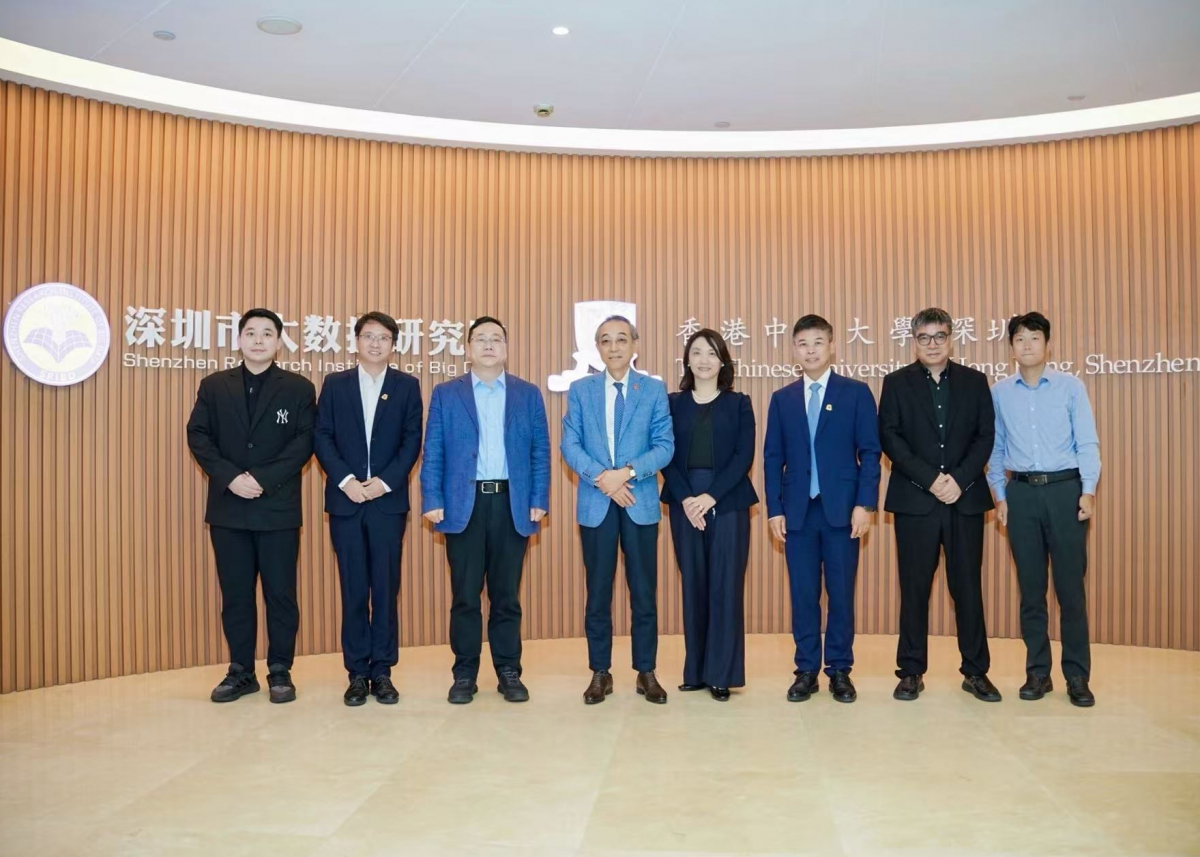





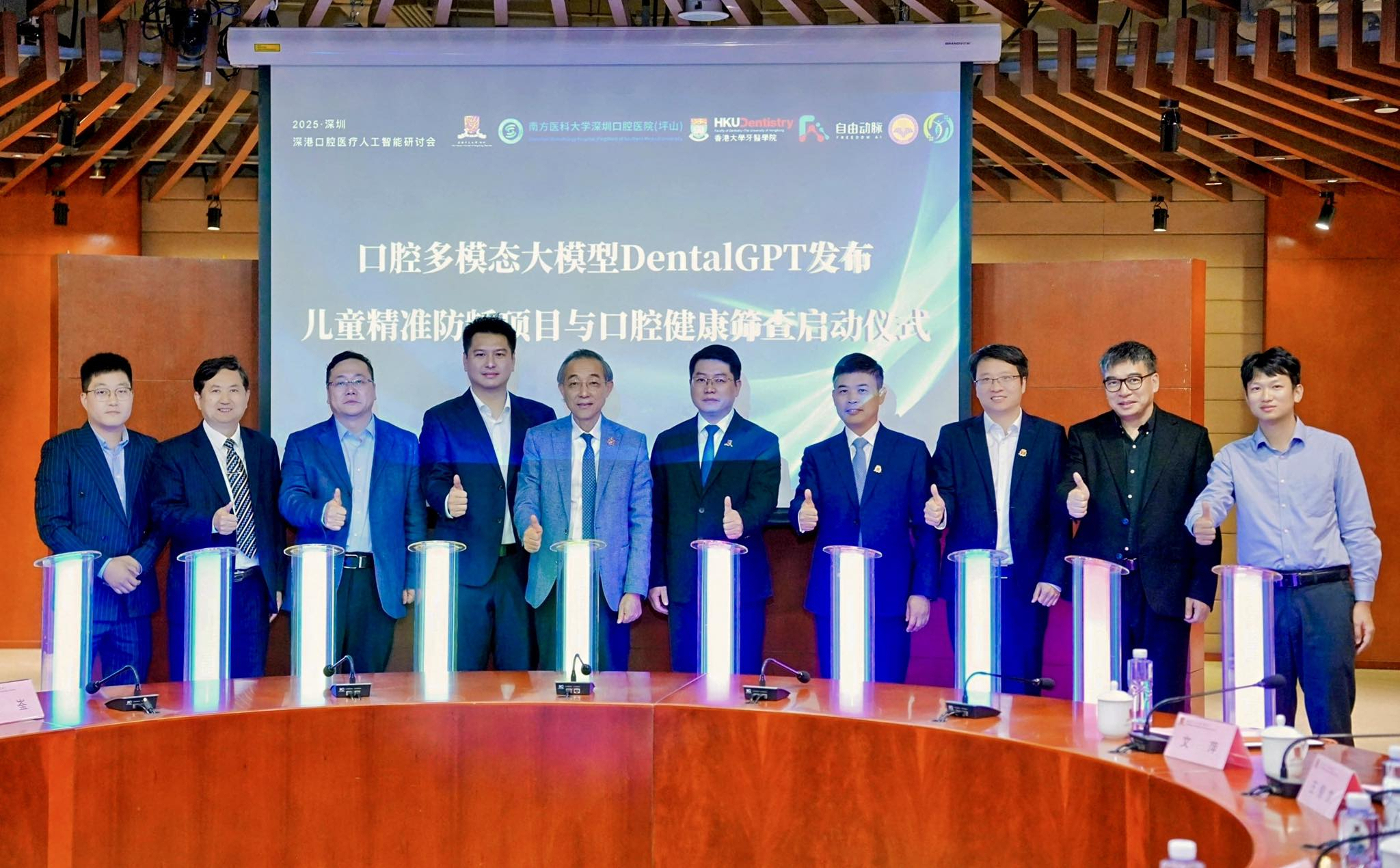
HKU Faculty of Dentistry, in collaboration with CUHK (Shenzhen), Shenzhen Stomatology Hospital (Pingshan) of Southern Medical University, Peking University National Biomedical Imaging Center, and Shenzhen Freedom AI Technology Co., Ltd., has jointly developed and launched the world’s first multimodal large language model purpose-built for dental-image recognition: DentalGPT. Trained on an extensive, professionally curated dataset of dental images and refined with reinforcement-learning strategies, the model achieves a marked boost in discerning fine-grained radiographic details and in conducting complex clinical reasoning. DentalGPT accurately analyzes intra-oral photographs, panoramic x-rays, and other routine dental images, identifies a wide spectrum of common oral diseases, and delivers explanatory, image-based answers.
Evaluations show that DentalGPT attains an average score of 67.1 on multiple disease-classification datasets annotated by licensed dentists — outperforming GPT-5’s 59 points — and surpasses existing commercial multimodal large models overall, demonstrating exceptional promise as a clinical aid. The breakthrough is expected to power a closed-loop “hospital – home – community” health-management ecosystem, bringing AI-driven care to Greater Bay Area residents, gradually generating a regional map of oral-health epidemiology, and informing public-health policy. Through cross-disciplinary collaboration and smart empowerment, it will guide dental AI from merely “usable” to genuinely “helpful and routinely used.”
Junjie Zhao, a Year 2 PhD student of the HKU-BICI Entrepreneurship Joint Educational Placement Programme under the co-supervision of Professor Junwen Wang from the Faculty of Dentistry and Professor Liangyi Chen from Peking University, is a co-first author of a paper on this study, titled DentalGPT: Incentivizing Multimodal Complex Reasoning in Dentistry (https://arxiv.org/abs/2512.11558).